5 compounds · from $53.99
Mendmaxxing — BPC-157, TB-500 & Tissue Repair Blends
Mendmaxxing is the shortest shelf on this site and that is on purpose. The number of repair peptides with a substantial preclinical record is small, and filling the category out with speculative compounds would make it harder to use, not easier. What is here is BPC-157 and TB-500, the two most-studied repair peptides available, plus Thymosin Alpha-1 from the same protein family doing a different job, and the pre-mixed blends for anyone who would rather run one injection than two. BPC-157 also earns its place as the standard co-administration for anything off the Burnmaxxing shelf. Vials, oral capsules and blends are all listed with lot-matched certificates.
BPC-157 + TB-500 Blend
20 MG
BPC-157
10 MG
TB-500 (Thymosin Beta-4)
10 MG
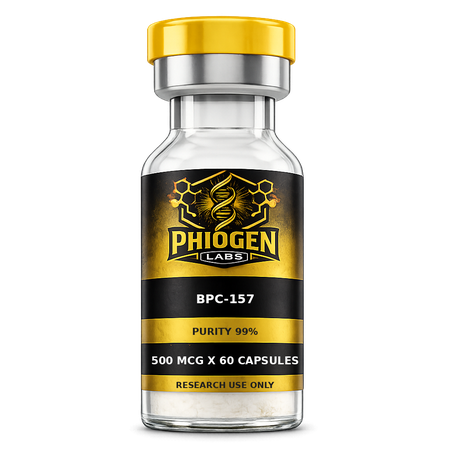
BPC-157 Capsules
500 MCG x60
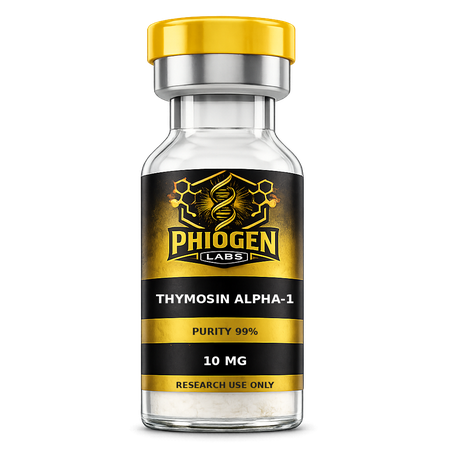
Thymosin Alpha-1
10 MG
Local Versus Systemic
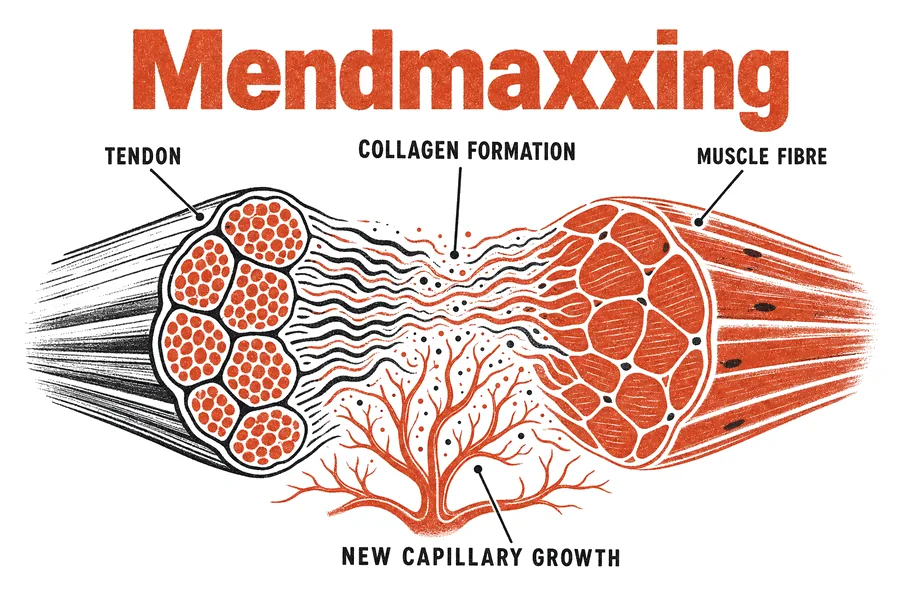
The single most useful thing to understand about this shelf is that BPC-157 and TB-500 differ in distribution before they differ in mechanism. BPC-157 concentrates near where it is administered, which makes it precise but means placement matters. TB-500 distributes through the bloodstream and can reach several sites at once, which makes it convenient but diffuse. Half-lives track the same split — roughly four hours against roughly ten days. A protocol targeting one known injury and a protocol addressing general systemic recovery should not use the same compound, and the two stack cleanly because they are solving different geometry.
Four Mechanisms Behind BPC-157
BPC-157's evidence base is unusually broad for a peptide of its size. VEGFR2 upregulation drives angiogenesis at injury sites. FAK-paxillin signalling promotes cell migration and adhesion. Nitric oxide synthase upregulation produces the gastroprotective effect, which is the single most replicated finding across the whole dataset. NF-κB downregulation handles inflammatory signalling across gastrointestinal, musculoskeletal and hepatic models. That breadth is why it appears in protocols that have nothing to do with tendon repair, and why the oral capsule form exists at all — when the target tissue is the gut itself, systemic absorption is not the goal.
How TB-500 Actually Works
TB-500 is a synthetic fragment of Thymosin Beta-4, and its primary action is sequestering G-actin monomers. Pulling monomeric actin out of circulation disrupts polymerisation into F-actin filaments, and that disruption is what enables the cell migration underlying wound closure. Alongside that it independently stimulates angiogenesis and downregulates inflammatory signalling. The long half-life means loading-and-maintenance dosing patterns work well here, which is not true of BPC-157 and is a common source of confusion when the two are run together.
Thymosin Alpha-1 Does Something Else
It shares a family name with TB-500 and gets shelved next to it, but Thymosin Alpha-1 is an immunomodulator rather than a repair peptide. It acts on toll-like receptors to influence dendritic cell maturation and T-cell differentiation, and its clinical history sits in hepatitis B and C adjunct therapy and in sepsis — not in tissue healing. It is here because immune function and recovery are genuinely related and because the family name puts it here. It is not a substitute for either of the other two and should not be bought as one.