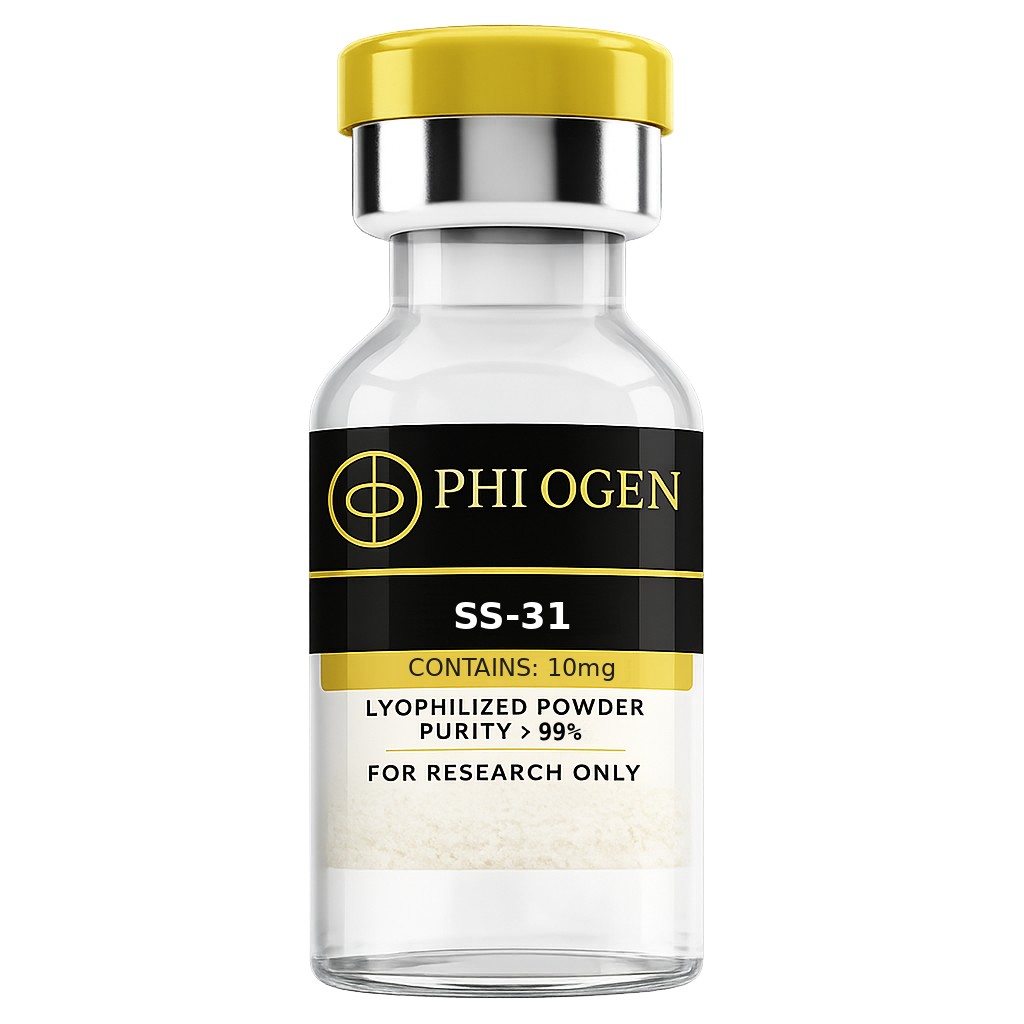
SS-31 10mg
healing
Quality Rating

Buy SS-31 10mg

Mitochondria-targeted antioxidant — protects inner membrane, restores energy production

Inner mitochondrial membrane targetCardiolipin protectionHeart failure trial evidence

Who This Is For

Users seeking deep mitochondrial restoration for aging, heart health, or exercise performance via cardiolipin protection.

Overview & Benefits

SS-31 (Elamipretide, MTP-131) is a cell-permeable tetrapeptide that selectively accumulates in the inner mitochondrial membrane where it binds cardiolipin — the lipid critical for cristae structure and electron transport chain function. By protecting cardiolipin from oxidation and peroxidation, SS-31 preserves mitochondrial structure and restores ATP synthesis efficiency in aged, diseased, or overloaded mitochondria. Clinical trials in heart failure (EMBRACE-HF) showed significant improvement in exercise tolerance and mitochondrial function. Animal aging studies showed restoration of mitochondrial function in old muscle tissue to near-youthful levels. SS-31 is among the most direct mitochondrial restoration compounds in research.

Key Benefits

  • Selectively concentrates in inner mitochondrial membrane
  • Protects cardiolipin — maintains cristae structure and ETC function
  • Restores ATP synthesis in aged and damaged mitochondria
  • Heart failure trial improvement in exercise tolerance
  • Near-youthful mitochondrial restoration in aging animal models

Protocols & Dosing

Daily Mitochondrial Protocol

Once daily
2–8mg subcutaneous or IV

Run continuously — benefits are cumulative over weeks to months.

SS-31: Stabilizing Mitochondrial Architecture at the Cardiolipin Level

SS-31 (also known as Elamipretide, MTP-131, and Bendavia) is a synthetic mitochondria-targeted tetrapeptide with the sequence D-Arg-Dmt-Lys-Phe-NH2 (where Dmt is 2',6'-dimethyltyrosine). Its entry into the inner mitochondrial membrane (IMM) is driven by the alternating cationic (Arg, Lys) and aromatic (Dmt, Phe) residues that allow it to partition into lipid bilayers with a preference for highly curved membranes — precisely the property of the IMM cristae, whose extreme curvature is essential for ATP synthase assembly and function. This passive accumulation at the IMM is independent of the membrane potential, a critical advantage over older mitochondria-targeted antioxidants like MitoQ that require an intact membrane potential for accumulation and may therefore fail to reach the most severely damaged mitochondria. The primary molecular target of SS-31 is cardiolipin, a unique four-acyl-chain phospholipid found almost exclusively in the IMM where it is required for the function of virtually all ETC complexes and ATP synthase. Cardiolipin stabilizes the IMM cristae curvature, facilitates proton channeling within the cristae lumen to ATP synthase, and is essential for the formation of respiratory chain supercomplexes — highly organized assemblies of ETC Complexes I, III, and IV (and sometimes II) that dramatically increase electron transfer efficiency and minimize ROS generation. With aging and disease, cardiolipin undergoes peroxidative damage by mitochondria-generated ROS, driving cristae flattening, supercomplex disassembly, and impaired electron transport — a cycle of structural and functional deterioration that SS-31 interrupts. SS-31 binds directly to cardiolipin via electrostatic and hydrophobic interactions, reducing its susceptibility to peroxidation. This stabilization preserves cristae morphology, maintains supercomplex assembly, reduces electron "leakage" that generates superoxide at Complex I and III, and maintains the proton-motive force necessary for efficient ATP synthesis. The antioxidant mechanism is catalytic rather than stoichiometric: SS-31 does not permanently neutralize ROS but continuously protects the lipid environment from oxidative modification, meaning that nanomolar concentrations can produce sustained effects over extended time periods. This catalytic efficiency distinguishes SS-31 from consumable antioxidants like coenzyme Q10 or MitoQ. Beyond the direct cardiolipin effect, SS-31 has been shown to improve the assembly and stability of OPA1-mediated cristae junctions — the narrow connections between the cristae lumen and the intermembrane space that regulate cytochrome c retention. Maintaining cytochrome c in the cristae compartment is essential both for efficient electron transfer and for preventing inappropriate apoptosis signaling: once cytochrome c escapes to the cytoplasm, it triggers caspase activation and cell death. SS-31's preservation of cristae junction integrity may therefore contribute to both improved bioenergetics and reduced apoptotic sensitivity in aged or stressed tissues.

SS-31 Clinical Development: From Preclinical Promise to Phase II Cardiology

SS-31 is one of the most clinically advanced mitochondria-targeted peptides, having progressed through Phase I safety studies and Phase II efficacy trials in several cardiovascular indications. In preclinical models, SS-31 demonstrated remarkable effects in models of heart failure, ischemia-reperfusion injury, renal failure, and skeletal muscle aging. In aged rat skeletal muscle, SS-31 treatment for 8 weeks restored mitochondrial cristae morphology to that seen in young animals, normalized Complex I and III activity, and improved force generation in isolated muscle preparations — a structural and functional rescue that preceded measurable improvements in whole-animal physical performance. The most significant clinical data comes from the PROGRESS-HFpEF trial, a Phase II randomized controlled study examining SS-31 (Elamipretide, 40 mg/day subcutaneous for 4 weeks) in patients with heart failure with preserved ejection fraction (HFpEF). This notoriously treatment-resistant form of heart failure is characterized by impaired cardiac energetics, left ventricular diastolic dysfunction, and reduced exercise tolerance without systolic dysfunction. The trial showed that SS-31 significantly improved left atrial volume index, 6-minute walk test distance, and patient-reported quality of life scores versus placebo, with the improvements maintained at 24 weeks post-treatment. These results positioned SS-31 as a mechanistically novel treatment for HFpEF based on improving myocardial mitochondrial function. In Barth syndrome — a rare X-linked cardiomyopathy caused by tafazzin mutations that impair cardiolipin remodeling — SS-31 produced extraordinary improvements in a small open-label trial. Patients with severely compromised cardiac and skeletal muscle function showed dramatic reversal of cardiomyopathy markers, improved exercise capacity, and better quality of life within weeks of starting treatment. This disease-specific evidence directly validates the cardiolipin-binding mechanism, as Barth syndrome is defined by cardiolipin deficiency — the exact molecular target SS-31 is designed to protect.

Key Studies

1

Szeto HH & Schiller PW, AAPS Journal, 2011

SS-31 selectively accumulated in IMM without requiring membrane potential, bound cardiolipin with high affinity, and catalytically prevented cardiolipin peroxidation at nanomolar concentrations.

2

Dauber IM et al., JACC: Heart Failure, 2021 (PROGRESS-HFpEF)

In a Phase II RCT, SS-31 (Elamipretide) significantly improved left atrial volume index, 6-minute walk distance, and quality of life in HFpEF patients with durable effects at 24 weeks.

3

Chatfield KC et al., Orphanet Journal of Rare Diseases, 2019

Elamipretide in Barth syndrome patients produced rapid and marked improvements in cardiomyopathy, skeletal muscle weakness, and neutropenia, directly validating the cardiolipin-targeted mechanism.

4

Siegel MP et al., Aging Cell, 2013

Eight weeks of SS-31 treatment in aged rats restored skeletal muscle mitochondrial morphology, Complex I/III activity, and contractile force generation to young-animal levels.

5

Bharat D et al., PLOS ONE, 2020

SS-31 preserved OPA1-mediated cristae junction integrity under stress, reducing cytochrome c release and caspase activation in cardiomyocytes subjected to ischemia-reperfusion.

Safety Profile & Side Effects

Injection site reactions

low

Subcutaneous injection commonly produces mild erythema and discomfort lasting a few hours; clinical trial data showed a 15–20% incidence of injection site reactions, none requiring discontinuation.

Nausea

low

Mild transient nausea reported in approximately 10% of clinical trial participants; typically resolves within the first week of treatment.

Hypotension

moderate

As mitochondrial efficiency improves and cardiac output increases, blood pressure may decrease modestly; monitor in patients already on antihypertensive medications.

Fatigue (transient)

low

Some users report brief initial fatigue in the first few days of a new cycle as metabolic shift from glycolysis back toward efficient oxidative phosphorylation occurs.

SS-31 Buyers Guide: A Structurally Complex Peptide Requiring Rigorous QC

SS-31 contains 2',6'-dimethyltyrosine (Dmt), a non-standard amino acid that significantly complicates synthesis and is absent from most commercial peptide synthesis inventories. Suppliers without access to high-purity Dmt will either substitute standard tyrosine (producing an inactive or less active compound) or provide an impure product with Dmt-related synthesis byproducts. Request that certificates of analysis specifically confirm the incorporation of Dmt by mass spectrometry fragmentation, not just molecular weight confirmation, as some truncation fragments have molecular weights close to the intact peptide. Purity should be ≥95% by HPLC with a certificate of analysis specifying the column type and solvent gradient used for analysis. Endotoxin content should be <1 EU/mg for subcutaneous administration. SS-31 was dosed at 40 mg/day subcutaneously in the PROGRESS-HFpEF clinical trial — a substantially higher dose than typical research peptide protocols. Community research protocols for mitochondrial aging and performance applications frequently use 1–5 mg subcutaneously per day or on alternate days, for cycles of 4–12 weeks. This lower research dose is appropriate given the extrapolation from the therapeutic clinical dose and the absence of human dose-ranging data for non-cardiac indications. Storage at −20 °C for lyophilized powder is essential; Dmt-containing peptides can be more susceptible to oxidation at the phenolic ring, so minimize exposure to oxygen during reconstitution by using nitrogen-purged bacteriostatic water where possible. Pre-reconstituted solutions should be used within 2–3 weeks when refrigerated and protected from light. Given the synthesis complexity, SS-31 is one of the peptides where purchasing from established, well-reviewed suppliers with a track record of correct Dmt incorporation is most critical.

SS-31 vs. MitoQ and Other Mitochondrial Antioxidants

The mitochondria-targeted antioxidant field includes MitoQ (mitoquinone, coenzyme Q10 conjugated to a triphenylphosphonium cation), SkQ1 (a similar Russian compound), and various MitoVitE derivatives. These compounds accumulate in the IMM via the membrane potential-dependent electrophoretic force of their cationic carrier, reaching 100–1,000 fold higher concentrations than in the cytoplasm. MitoQ has the most human clinical trial data of any mitochondria-targeted antioxidant, with studies in fatty liver disease, Parkinson's disease, and exercise performance. However, because MitoQ requires an intact membrane potential for accumulation, it is expected to accumulate less efficiently in the most severely damaged mitochondria where potential is collapsed — precisely the pathological situation it is meant to address. SS-31's membrane potential-independent accumulation gives it a theoretical advantage in severe bioenergetic failure. Additionally, SS-31's cardiolipin-binding mechanism provides a structural stabilization effect that purely antioxidant molecules cannot replicate: protecting cristae morphology and supercomplex assembly goes beyond preventing oxidative damage to maintaining the architectural framework necessary for optimal ETC function. The two approaches are not mutually exclusive; combining SS-31's structural protection with the enzymatic antioxidant capacity of CoQ10 supplementation is mechanistically rational. SS-31 represents the most targeted and structurally sophisticated mitochondrial intervention currently available in peptide form.

Stack With These Peptides

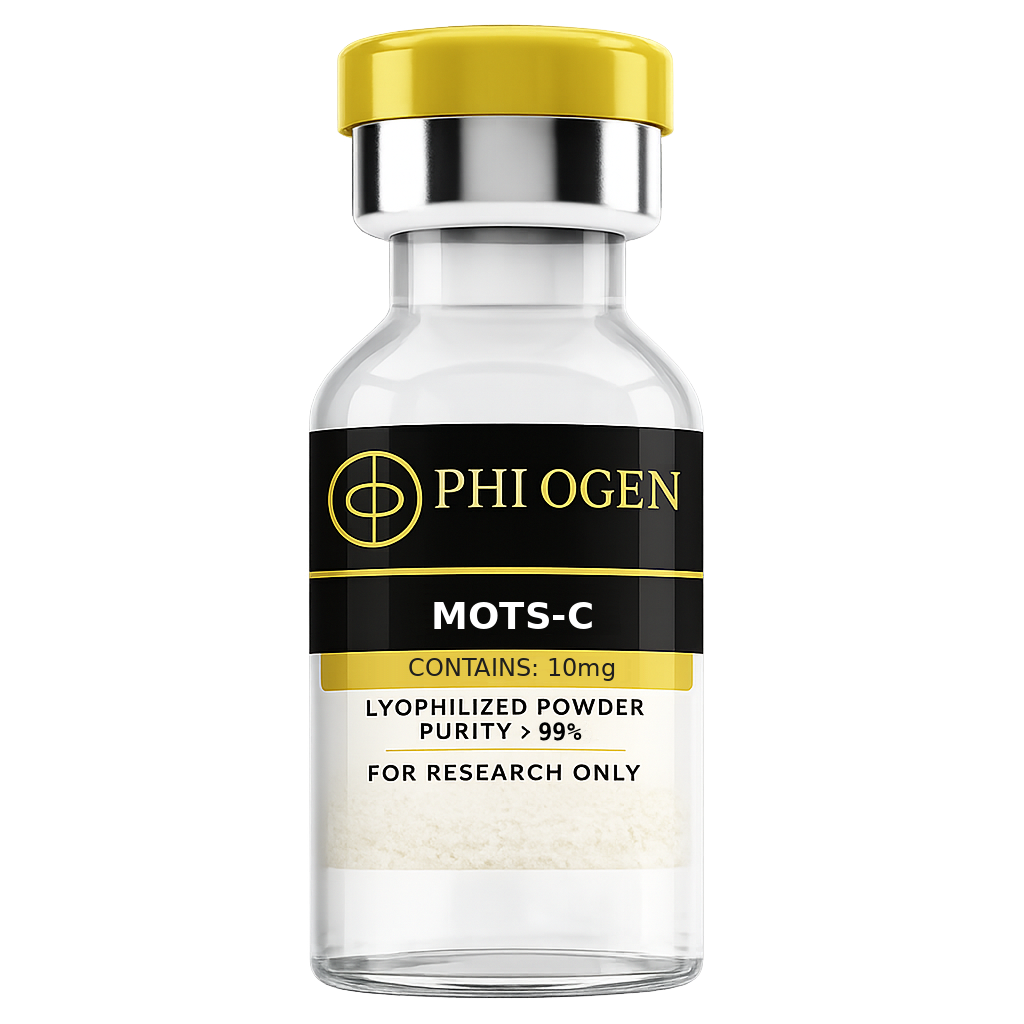
MOTS-c 10mg

MOTS-c 10mg

healing

View →
SS-31 10mg

Buy SS-31 10mg

$99.99

Buy Now — $99.99Buy at Phiogen

Research-grade · COA verified · Phiogen
Categoryhealing
Typeinjectable
Quality Rating★★★★★
VendorPhiogen

SS-31 10mg

$99.99

Buy Now