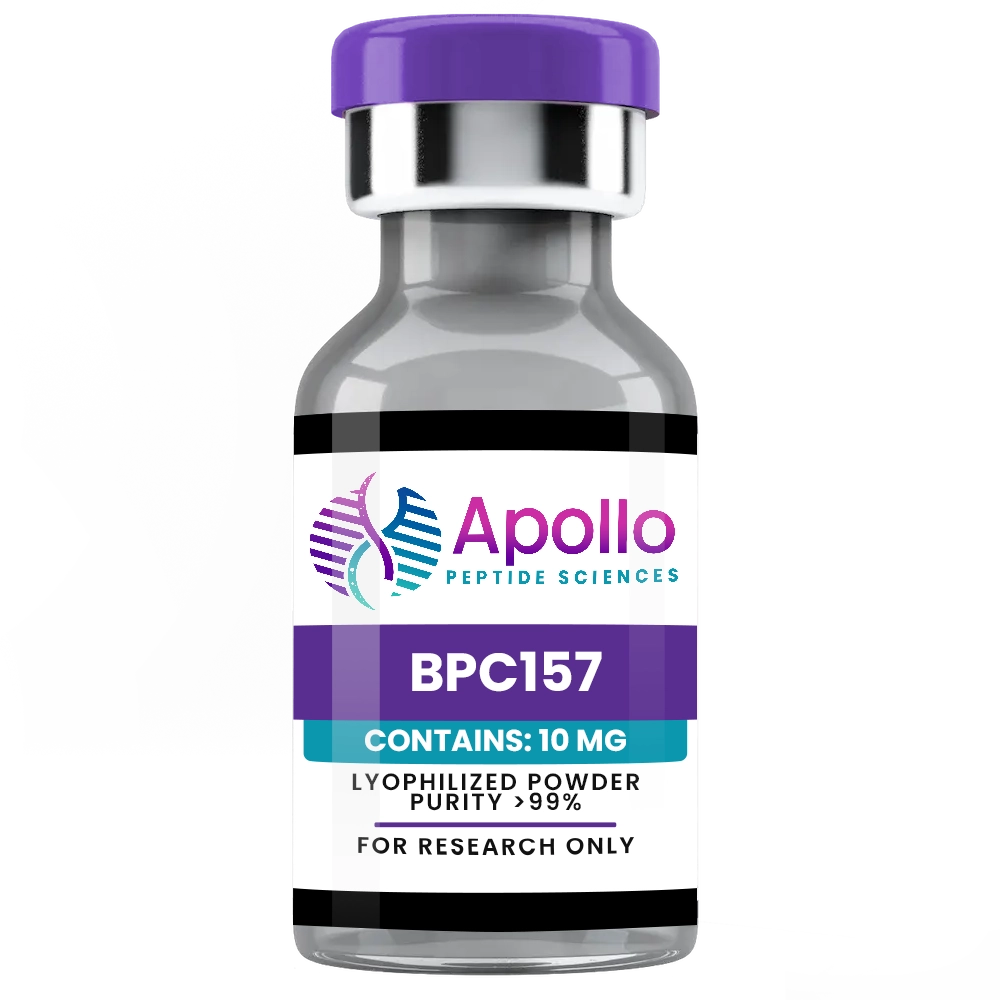
Buy BPC-157 10mg
The body's own repair peptide — accelerates healing in tendon, muscle, gut, and nerve tissue
Who This Is For
Athletes and active people dealing with persistent injuries, chronic pain, or gut issues that haven't responded to conventional treatment.
BPC-157 Protocol Snapshot
A 15-amino-acid pentadecapeptide isolated from human gastric juice — backed by 100+ published studies for pleiotropic tissue repair.
Amino acids
15
pentadecapeptide
Published studies
100+
peer-reviewed
Primary mechanism
GHr upregulation
in fibroblasts
Tissues targeted
7+
tendon, gut, nerve, vessel, muscle, bone, skin
Hormonal impact
None
no HPA suppression
Half-life (SC)
~4 hrs
supports twice-daily dosing
Overview & Benefits
Key Benefits
- Heals across every tissue type: tendon, ligament, muscle, gut, nerve, and bone simultaneously
- Builds new blood vessel networks at injury sites — accelerates nutrient delivery to damaged tissue
- Oral administration heals gut lining directly — effective for leaky gut, IBD, and NSAID damage
- No hormone suppression, no cycling required, no interactions with other compounds
- Promotes nerve regeneration in peripheral nerve injuries and spinal damage
- Reduces chronic inflammation at injury sites without cortisol elevation
- Noticeable healing acceleration typically within 2–4 weeks of consistent use
Protocols & Dosing
Injury Repair Protocol
Once or twice dailyInject as close to the injured tissue as safely accessible. Use a 29–31g insulin syringe. Run for 4–8 weeks depending on injury severity. Can pair with TB-500 for systemic reach.
Gut Healing Protocol
Once daily on empty stomachOral route targets gut tissue directly. Take 30 minutes before first meal. Run 4–6 weeks for leaky gut or IBD. Can be combined with KPV for enhanced mucosal repair.
Systemic Maintenance
Once dailyLower-dose maintenance after acute injury phase. Inject abdomen for systemic distribution. Some users run indefinitely at 250mcg/day; research supports long-term safety.
How BPC-157 Heals Tissue at the Molecular Level
Research Evidence & Clinical Data for BPC-157
Key Studies
Sikiric P et al., Journal of Physiology – Paris (2014)
Demonstrated that BPC-157 accelerated tendon-to-bone healing in a rat model of Achilles tendon transection, with treated animals showing significantly greater tensile strength and organised collagen architecture at 4 weeks post-injury.
Chang CH et al., Growth Factors (2011)
Showed BPC-157 upregulated VEGF and VEGFR2 expression in tenocytes and significantly increased in vitro tube formation in endothelial cells, confirming a direct pro-angiogenic mechanism.
Sikiric P et al., Current Pharmaceutical Design (2018)
Comprehensive review confirming BPC-157 cytoprotective effects in GI mucosa across multiple ulcer and colitis models, with NO-pathway dependence established by eNOS knockout experiments.
Staresinic M et al., Journal of Orthopaedic Research (2003)
Found that local application of BPC-157 to medial collateral ligament injuries in rats accelerated functional recovery and restored near-normal ligament morphology by week 6, versus persistent disorganised repair in controls.
Gwyer D et al., Regulatory Peptides (2019)
Systematic review of BPC-157 musculoskeletal literature confirming consistent pro-healing findings across tendon, ligament, muscle, and bone models, while noting the absence of published human trial data.
Safety Profile & Side Effects
Injection Site Reactions
lowSubcutaneous or intramuscular injection may cause transient redness, mild swelling, or bruising at the injection site. These reactions are typically self-limiting and resolve within 24–48 hours without intervention.
Nausea and GI Discomfort
lowA subset of users report mild nausea, particularly when first starting BPC-157. This may relate to the peptide's potent effects on GI motility and mucosal secretion. Reducing dose or taking with food often resolves the issue.
Dizziness or Lightheadedness
lowTransient dizziness has been reported, potentially linked to the peptide's vasodilatory effects via NO upregulation. This is generally mild and brief, but users should avoid operating heavy machinery immediately after dosing until individual response is established.
Theoretical Pro-angiogenic Concern
moderateBecause BPC-157 promotes angiogenesis and growth factor expression, theoretical concern exists regarding its use by individuals with pre-existing tumours or undiagnosed malignancy, where increased blood vessel growth could be counterproductive. This remains theoretical in the context of BPC-157 specifically, but is a standard precaution for all pro-angiogenic agents.
Elevated Mood / Dopaminergic Effects
lowAnimal studies have identified BPC-157 interactions with the dopaminergic and serotonergic systems. Some users report mild mood elevation or altered sleep patterns, particularly at higher doses. The clinical significance in humans is not well characterised.
Buyer's Guide: Selecting and Using BPC-157 10mg
BPC-157 vs. Alternative Healing Peptides
Buy BPC-157 10mg
$59.99
Buy Now — $59.99Buy at ApolloResearch-grade · COA verified · Apollo Peptide Sciences
Common Questions About BPC-157 10mg
How long does BPC-157 take to work?
Most users report measurable pain reduction and improved range of motion within 2–4 weeks of daily use at 250–500mcg. For acute injuries the response can begin within the first week. For chronic or long-standing injuries allow 6–8 weeks before evaluating. BPC-157 works faster for localized soft-tissue injuries than for nerve damage or advanced gut pathology, which require longer protocols.
What is the correct BPC-157 dosage?
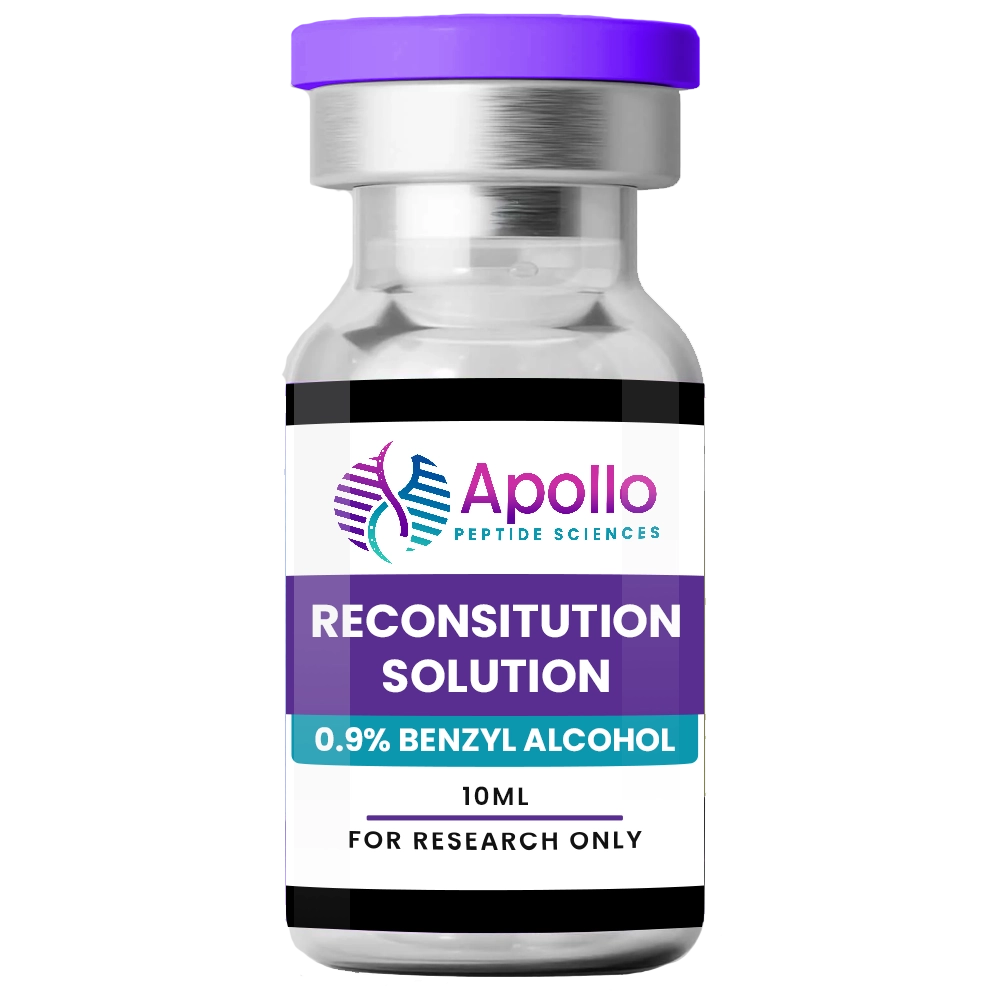
The standard therapeutic range is 250–500mcg per day injected subcutaneously near the injury site using a 29–31 gauge insulin syringe. For gut healing the same dose can be taken orally on an empty stomach. Start at 250mcg/day and increase to 500mcg after 2 weeks if response is insufficient. Reconstitute the 10mg vial with 2ml bacteriostatic water to get 5,000mcg/ml — a 250mcg dose is then 0.05ml (5 units on a 100-unit syringe).
Can you combine BPC-157 with TB-500?
Yes — this is the gold-standard healing combination. BPC-157 handles local angiogenesis, receptor upregulation, and fibroblast activation at the specific injury site. TB-500 drives systemic stem cell recruitment from any injection site, covering areas BPC-157 cannot efficiently reach locally. Together they address every phase of the repair cascade. Standard combined protocol: BPC-157 at 250–500mcg daily + TB-500 at 2.5mg twice weekly for 6–8 weeks.
Related Protocols
TB-500 10mg
Pair with BPC-157 for full systemic + local repair coverage.
Healing & Recovery Stack
The complete 3-peptide tissue repair protocol.
Healing Peptide Guide
All three repair phases explained with dosing timelines.
GHK-CU Copper Peptide
Add collagen remodeling and gene-level repair to your protocol.
BPC-157 10mg
$59.99