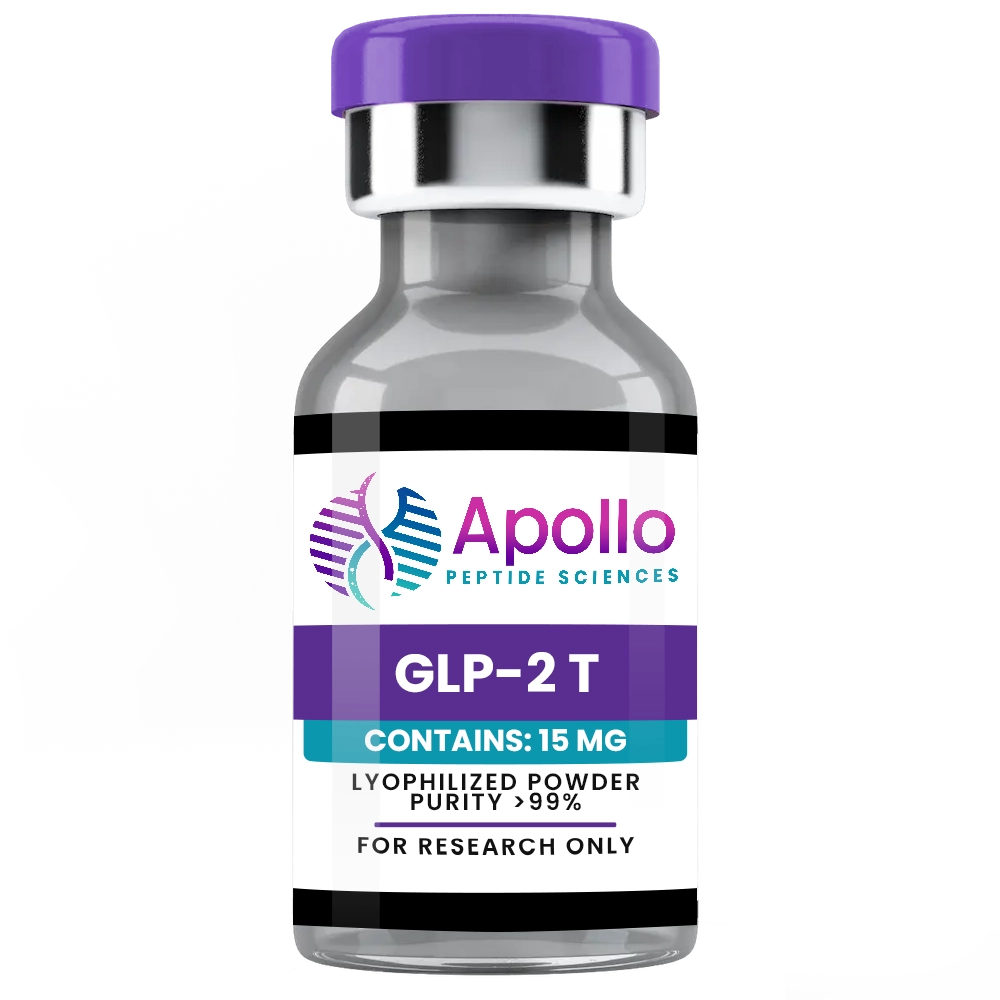
GLP-2 T 15mg
fat loss
Quality Rating

Buy GLP-2 T 15mg

Dual GLP-1 + GIP agonist — superior fat loss and metabolic improvement beyond semaglutide alone

22.5% weight loss in trialsBeats semaglutideDual GLP-1 + GIP

Who This Is For

Anyone who wants the most effective GLP-1 class fat loss protocol available, particularly those comparing options and willing to invest in superior outcomes.

Tirzepatide 15mg — Dual Agonist Data

"Twincretin" — a single molecule activating both GLP-1 and GIP receptors simultaneously. Dual activation works synergistically to enhance fat oxidation and reduce GI side effects.

Receptor targets

GLP-1 + GIP

dual agonism

SURMOUNT weight loss

22.5%

avg at 15mg/wk (72 wks)

vs. Semaglutide

+50% more

fat loss in head-to-head

Plasma half-life

~5 days

once-weekly injection

GI tolerability

Improved

GIP reduces nausea

Approval names

Mounjaro / Zepbound

Eli Lilly

Overview & Benefits

If you've researched semaglutide and are now looking at whether tirzepatide is worth the upgrade, the answer is in the numbers: 22.5% average body weight loss versus 14.9%. That's not a marginal improvement — it's the difference between losing 30 pounds and losing 45 pounds on an identical starting weight and timeline. The SURMOUNT trials ran head-to-head comparisons, and tirzepatide won decisively at every dose level. For anyone who is serious about fat loss outcomes, tirzepatide is simply the better compound. The reason for the superior results lies in the second receptor. Tirzepatide activates both GLP-1 and GIP receptors simultaneously — GIP (glucose-dependent insulinotropic polypeptide) receptors are distributed throughout adipose tissue, and their activation drives fat oxidation and energy expenditure beyond what appetite suppression alone achieves. GLP-1 handles the appetitive side — reducing hunger, slowing gastric emptying. GIP handles the metabolic side — actively enhancing the rate at which stored fat is oxidized. The combination produces a physiological environment that's more favorable to fat loss than pure GLP-1 agonism can create. There's also a tolerability argument for tirzepatide. GIP receptor activation appears to buffer some of the GI side effects associated with pure GLP-1 agonists — nausea in particular tends to be less pronounced with tirzepatide, and the overall side effect burden at comparable efficacy doses is frequently reported as lower. For users who tried semaglutide and found the nausea difficult to manage, this is worth noting. The 15mg vial covers your titration phase from 2.5mg/week through your first few weeks at 5mg/week — the range where most users first start feeling meaningful appetite suppression and where the decision to continue becomes obvious. Think of this as your entry-point investment in the superior protocol.

Key Benefits

  • 22.5% average body weight loss in trials — nearly 50% more than semaglutide
  • Dual GLP-1 + GIP activation drives both appetite reduction and active fat oxidation
  • Frequently better tolerated than pure GLP-1 agonists — less nausea at comparable efficacy
  • Superior insulin sensitivity improvements vs. semaglutide in head-to-head data
  • Excellent body composition profile: fat loss with preserved lean mass
  • Once-weekly injection with 5-day half-life — same convenience as semaglutide
  • The same pharmacology as FDA-approved Mounjaro and Zepbound

Protocols & Dosing

Standard Tirzepatide Titration

Once weekly injection
Weeks 1–4: 2.5mg | Weeks 5–8: 5mg | Weeks 9–12: 7.5mg | Maintenance: 10–15mg

Slower titration reduces GI side effects. Many users find 5–7.5mg/week is optimal — providing significant fat loss with manageable side effects. Do not rush escalation.

How Tirzepatide Works: Dual GIP and GLP-1 Receptor Co-Agonism

Tirzepatide is a first-in-class dual glucose-dependent insulinotropic polypeptide (GIP) and GLP-1 receptor co-agonist. It is a 39-amino-acid synthetic peptide engineered on a GIP backbone with GLP-1 receptor-binding motifs inserted at strategic positions. A C20 fatty diacid moiety attached via a mini-PEG spacer confers albumin binding analogous to that of semaglutide, extending the half-life to approximately 5 days and enabling once-weekly subcutaneous dosing. Both receptors—GIP-R and GLP-1R—are class B GPCRs that signal primarily through Gs/adenylyl cyclase/cAMP pathways, but their tissue expression patterns are distinct, and simultaneous activation creates a synergistic metabolic effect that neither receptor alone can reproduce. GIP-R is expressed at high density in adipose tissue—both white and brown—where its activation enhances insulin-stimulated glucose uptake, promotes fatty acid esterification under energy-surplus conditions, and, crucially under caloric restriction, dramatically accelerates lipolysis and free fatty acid mobilisation. This context-dependency is central to tirzepatide's superior efficacy: in an energy-deficit state, GIP-R agonism in adipose tissue compounds the lipolytic signal rather than opposing it, driving greater absolute fat mobilisation than GLP-1 agonism alone. Simultaneously, GIP-R activation in the central nervous system (hypothalamus and brainstem) amplifies the satiety signalling initiated by GLP-1R, creating a dual-pathway suppression of food intake that produces more profound appetite reduction than either signal in isolation. GLP-1R agonism within tirzepatide mirrors the mechanisms established for semaglutide: suppression of NPY/AgRP, upregulation of POMC/CART, glucose-dependent insulin secretion enhancement, glucagon suppression, and gastric emptying delay. However, the additive central satiety effects from GIP-R co-stimulation mean that tirzepatide achieves greater caloric restriction for an equivalent or lower dose of GLP-1 activity. Pancreatic beta-cell function is additionally enhanced by GIP-R stimulation of beta-cell proliferation and anti-apoptotic signalling via PI3K/Akt pathways—an effect not shared by pure GLP-1 agonists and particularly relevant for subjects with impaired beta-cell reserve. At the adipose-tissue level, tirzepatide's combined receptor activity leads to greater reductions in subcutaneous and visceral fat mass than semaglutide in head-to-head comparisons. Brown adipose tissue (BAT) thermogenesis is also enhanced through GIP-R-mediated upregulation of uncoupling protein 1 (UCP1) and increased sympathetic innervation of BAT depots, contributing to elevated resting energy expenditure. The aggregate result is a metabolic shift toward fat oxidation that is both more powerful and more sustained than that achieved by single-receptor GLP-1 agonists, explaining tirzepatide's superior percentage weight loss across all major clinical trials.

Clinical Evidence: Tirzepatide in the SURMOUNT and SURPASS Trial Programs

The SURMOUNT program (Tirzepatide Once Weekly for the Treatment of Obesity) produced the most compelling weight-loss data for any pharmacological agent at the time of publication. SURMOUNT-1, enrolling 2,539 adults with obesity (BMI ≥30 or ≥27 with comorbidities) without diabetes, showed mean body-weight reductions of 15.0%, 19.5%, and 20.9% at 5 mg, 10 mg, and 15 mg doses respectively over 72 weeks, versus 3.1% with placebo. At the 15 mg dose, 57% of participants lost at least 20% of body weight—a threshold previously achievable only with bariatric surgery. Absolute fat mass reductions measured by DXA were proportionally larger for visceral fat than subcutaneous fat, with visceral adipose tissue declining by up to 45% from baseline at maximal doses. SURMOUNT-2 extended these findings to adults with type-2 diabetes, a population with physiologically impaired weight-loss capacity, where tirzepatide 15 mg still achieved 13.4% weight reduction—more than double the response seen with the best available diabetes medications. The SURPASS program in type-2 diabetes management demonstrated that tirzepatide outperformed insulin degludec, insulin glargine, and semaglutide 1 mg on both HbA1c reduction and weight loss endpoints. SURPASS-2 directly compared tirzepatide to semaglutide 1 mg, showing significantly greater weight loss (9.3 kg vs 5.5 kg) and HbA1c reduction with tirzepatide at equivalent doses. Body-composition data from SURMOUNT-1 and ancillary studies confirm that tirzepatide preserves lean mass at rates comparable to semaglutide when dietary protein is adequate, with the weight lost being approximately 84% adipose tissue. Skeletal muscle biopsies in a mechanistic substudy showed improved mitochondrial function and lipid oxidative capacity in tirzepatide-treated subjects, suggesting that the metabolic improvements extend beyond simple mass reduction to genuine tissue-level metabolic health restoration.

Key Studies

1

Jastreboff AM et al. SURMOUNT-1 Trial. N Engl J Med. 2022;387(3):205–216.

Tirzepatide 15 mg achieved 20.9% mean weight loss at 72 weeks; 57% of participants lost ≥20% of body weight.

2

Garvey WT et al. SURMOUNT-2 Trial. Lancet. 2023;402(10402):613–626.

In adults with type-2 diabetes, tirzepatide 15 mg achieved 13.4% weight loss over 72 weeks—superior to any existing diabetes pharmacotherapy.

3

Frías JP et al. SURPASS-2 Trial. N Engl J Med. 2021;385(6):503–515.

Tirzepatide significantly outperformed semaglutide 1 mg on weight loss (9.3 kg vs 5.5 kg) and HbA1c reduction in type-2 diabetes.

4

Dahl D et al. SURPASS-3 Trial. Lancet Diabetes Endocrinol. 2021;9(11):765–778.

Tirzepatide reduced HbA1c by up to 2.37% and body weight by 12.9 kg compared to insulin degludec.

5

Coskun T et al. Endocrinology. 2018;159(11):3741–3754.

Preclinical mechanistic study confirming tirzepatide's additive GIP+GLP-1 synergism in adipose lipolysis and hypothalamic satiety signalling.

6

McLean BA et al. Cell Metab. 2021;33(9):1750–1765.

Dual GIP/GLP-1 receptor activation in adipose tissue produced greater fat mobilisation than either agonist alone under caloric restriction conditions.

Safety Profile & Side Effects

Nausea

moderate

Present in up to 31% of subjects at 15 mg in SURMOUNT-1. Generally more pronounced than with semaglutide at equivalent weight-loss doses but follows the same trajectory of resolution after each dose-escalation step.

Diarrhoea

moderate

Reported in approximately 23% of tirzepatide users. Accelerated intestinal transit mediated by GLP-1R activation; generally mild and self-limiting within the first month at any given dose.

Vomiting

moderate

Affects roughly 12–18% of users during dose escalation. More commonly associated with high-fat meals consumed close to injection timing.

Decreased Appetite (severe)

moderate

The dual receptor mechanism produces a more profound appetite suppression than single-agonist GLP-1 drugs. In some subjects this can progress to clinically insufficient caloric intake, requiring structured meal plans.

Injection-Site Reactions

low

Erythema, pruritis, and mild oedema at the injection site occur in approximately 6–7% of users. Site rotation and proper subcutaneous technique minimise recurrence.

Pancreatitis (rare)

high

Class-level precaution shared with all incretin-based therapies. Incidence below 0.5% in clinical trials; upper-abdominal pain of unusual character and severity warrants evaluation.

Buyers Guide: Tirzepatide 15 mg — Starter Vial for Dual-Agonist Protocols

The 15 mg tirzepatide vial is the recommended entry point for research subjects beginning a tirzepatide protocol. Standard escalation initiates at 2.5 mg weekly for the first four weeks, advancing by 2.5 mg increments every four weeks as tolerated, up to a maximum of 15 mg weekly. The 15 mg vial provides six weeks of doses at the starting 2.5 mg level, or three weeks at the 5 mg maintenance level—making it the appropriate quantity to assess initial tolerability and confirm that dose escalation is proceeding as expected before committing to larger supply volumes. Subjects transitioning from a semaglutide protocol should note that tirzepatide's GI side-effect profile, while similar in character, is somewhat more pronounced at equivalent weight-loss effectiveness doses. A conservative escalation strategy—spending 4–6 weeks at each dose level rather than the minimum 4 weeks—meaningfully reduces the incidence of nausea and vomiting and improves protocol adherence. The 15 mg starter vial gives researchers exactly the quantity needed to execute this conservative initial phase without committing to inventory that would become redundant if dose sensitivity necessitates a protocol adjustment. When sourcing tirzepatide, purity verification is critical because its complex 39-amino-acid structure with attached fatty acid chain creates more potential points of synthetic error than shorter peptides. Certificates of analysis should include HPLC purity (target above 98%), mass spectrometry confirming the intact peptide mass of 4,813.5 Da, and amino-acid analysis confirming sequence fidelity. Lyophilised powder stored at -20 °C prior to reconstitution maximises shelf stability; once reconstituted in bacteriostatic water, vials should be stored at 2–8 °C and used within 28 days. For subjects who respond well and proceed to the full escalation schedule, subsequent purchases of the 30 mg or 60 mg vials will offer better per-dose economics.

Tirzepatide vs. Alternatives: Superior Efficacy with Manageable Trade-offs
Tirzepatide currently represents the best-evidenced pharmacological weight-loss agent for subjects without established cardiovascular disease who prioritise maximum fat-mass reduction. Its SURMOUNT-1 results—20.9% mean weight loss at 15 mg—exceed semaglutide's STEP-1 results (14.9%) by a clinically meaningful margin, and the SURPASS-2 head-to-head directly confirmed tirzepatide's superiority over semaglutide 1 mg in matched populations. The dual GIP+GLP-1 mechanism provides not only greater appetite suppression but also enhanced adipose lipolysis and BAT thermogenesis—mechanistic advantages that compound over time in extended protocols. Against retatrutide (the triple GLP-1/GIP/glucagon agonist), tirzepatide yields modestly lower average weight loss in early-phase trials—approximately 20–25% versus retatrutide's 24% observed in phase-2 data—but the gap is narrower than the tirzepatide-versus-semaglutide comparison, and tirzepatide's phase-3 evidence base is substantially more mature. For most research applications, tirzepatide represents the current optimal balance of documented efficacy, characterised tolerability, and supply reliability. Subjects who have previously cycled semaglutide and seek incremental fat-loss outcomes will find the dual-agonist mechanism provides the most meaningful additional benefit over their established baseline.

Stack With These Peptides

CJC-1295 / Ipamorelin

CJC-1295 / Ipamorelin

performance

View →
GLP-1 C + GLP-1 S

GLP-1 C + GLP-1 S

fat loss

View →
GLP-2 T 15mg

Buy GLP-2 T 15mg

$149.99

Buy Now — $149.99Buy at Apollo

Research-grade · COA verified · Apollo Peptide Sciences
Categoryfat loss
Typeinjectable
Quality Rating★★★★★
VendorApollo

Common Questions About GLP-2 T

What is tirzepatide and how does it work?

Tirzepatide is a dual GLP-1/GIP receptor agonist — it activates both the GLP-1 receptor (like semaglutide) and the GIP receptor simultaneously. GIP activation adds appetite suppression through an entirely distinct receptor pathway and appears to enhance the GLP-1 mechanism synergistically rather than simply duplicating it. SURMOUNT-1 (15mg dose, 72 weeks) produced 22.5% mean body weight loss — the highest of any approved weight loss drug at that time and significantly better than semaglutide.

What is the tirzepatide dosage and titration protocol?

Starting dose: 2.5mg/week subcutaneous injection for the first 4 weeks. Titrate up by 2.5mg every 4 weeks as tolerated: 2.5mg → 5mg → 7.5mg → 10mg → 12.5mg → 15mg (max). Most users find their optimal balance of efficacy and tolerability at 5–10mg/week. Slow titration is essential — rushing the escalation schedule produces unnecessary GI side effects. The 15mg vial provides approximately 6 weeks at the 2.5mg starting dose.

Tirzepatide vs semaglutide — what is the clinical difference?

Semaglutide activates only the GLP-1 receptor. Tirzepatide activates both GLP-1 and GIP receptors, producing greater appetite suppression and metabolic improvement through dual pathway activation. Clinical data: tirzepatide 22.5% mean body weight loss (SURMOUNT-1) vs semaglutide 14.9% (STEP 1) — a clinically meaningful 7–8 percentage point difference. Tirzepatide also produces greater improvements in HbA1c and insulin sensitivity. It is considered the step-up compound for users seeking maximum GLP-1 class fat loss.

GLP-2 T 15mg

$149.99

Buy Now