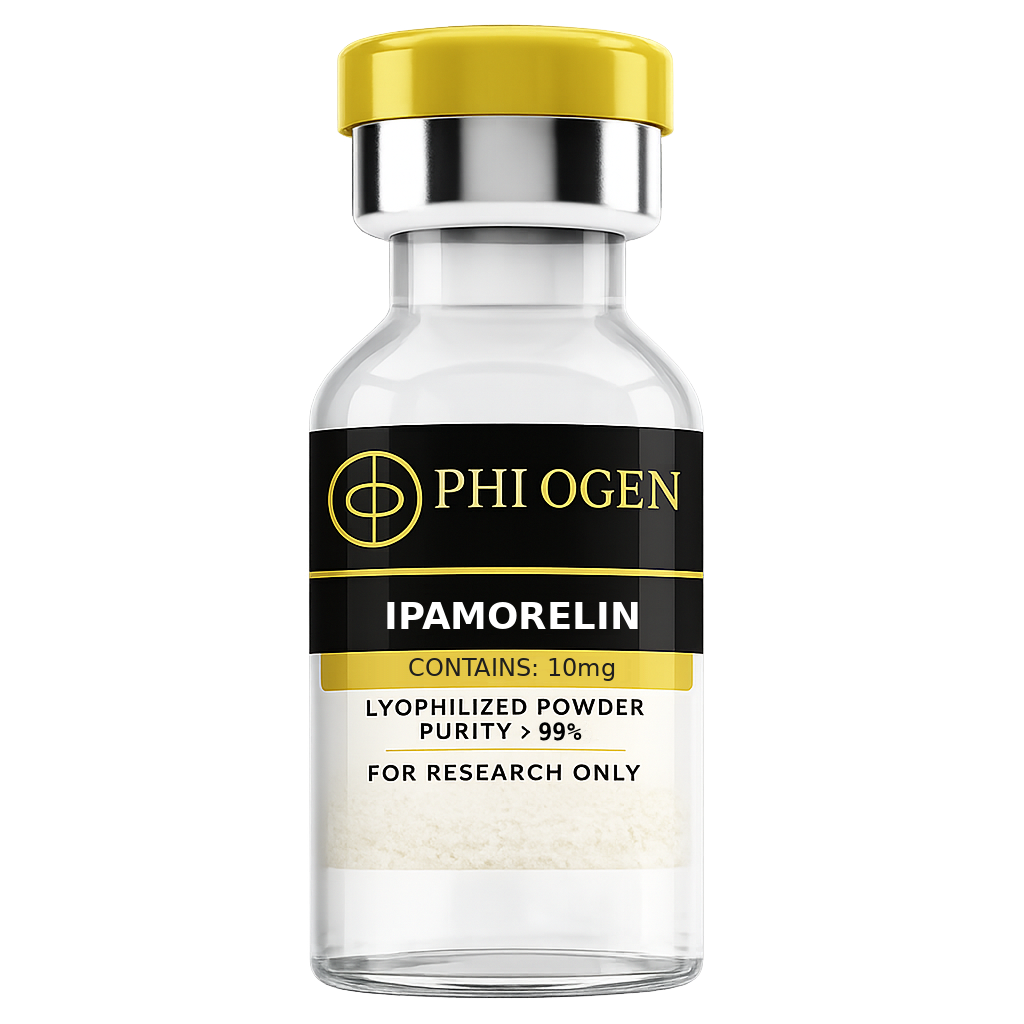
Ipamorelin 10mg
performance
Quality Rating

Buy Ipamorelin 10mg

Selective GH secretagogue — clean GH pulses without cortisol or prolactin elevation

No cortisol elevationCleanest GH secretagogueStack with CJC-1295

Who This Is For

Anyone starting a GH peptide protocol who wants clean, controllable GH stimulation without the side effects of less selective secretagogues.

Overview & Benefits

Ipamorelin occupies a unique position among GH secretagogues: it delivers consistent, physiological GH pulses without the cortisol spike that blunts GHRP-6's results, without the appetite dysregulation that makes GHRP-6 hard to manage, and without the prolactin elevation that concerns users running long cycles. It is the cleanest, most controllable entry point into GH peptide therapy — which is why most protocols recommend starting here. The mechanism is selective ghrelin receptor agonism. By binding the GHS-R1a receptor with high affinity and minimal off-target activation, Ipamorelin triggers anterior pituitary release of growth hormone in a pulse pattern that closely mimics natural nocturnal GH secretion. The result is elevated IGF-1 over 8–12 weeks, improved body composition, accelerated recovery, and improved sleep quality — the same outcomes as exogenous GH, at a fraction of the cost and regulatory risk. Ipamorelin is typically run alongside CJC-1295 No DAC (also called Modified GRF 1-29). CJC amplifies the GH pulse height by increasing pituitary sensitivity; Ipamorelin triggers the pulse. Together they produce synergistic GH release that neither compound achieves alone. This is the most widely used GH peptide combination in performance and anti-aging protocols.

Key Benefits

  • Clean GH pulses with no cortisol, prolactin, or appetite side effects
  • Selective ghrelin receptor agonism — high specificity, minimal off-target effects
  • Pairs with CJC-1295 for synergistic GH pulse amplification
  • Improves body composition, recovery speed, and sleep quality over 8–12 weeks
  • No pituitary desensitization with intermittent dosing

Protocols & Dosing

Standard GH Pulse Protocol

2–3x daily, 30–60 min before meals or sleep
100–300mcg per injection

Inject on empty stomach for best GH release. Most common: 200mcg before bed. Pair with CJC-1295 No DAC at the same dose for synergy. Run 12 weeks on, 4 weeks off.

Ipamorelin: Selective GHS-R1a Agonism and Clean Pulsatile GH Release

Ipamorelin (NNC 26-0161) is a synthetic pentapeptide — Aib-His-D-2-Nal-D-Phe-Lys-NH2 — developed by Novo Nordisk in the 1990s as a third-generation growth hormone secretagogue. Its defining characteristic relative to earlier GHS compounds is an exceptionally high selectivity for the growth hormone secretagogue receptor 1a (GHS-R1a) expressed on anterior pituitary somatotrophs, without meaningful affinity for adrenocorticotropin receptors (MC2-R), prolactin-releasing pathways, or other off-target GPCRs that produce the cortisol and prolactin elevation observed with GHRP-2 and GHRP-6. This receptor selectivity profile, combined with potent GH-releasing efficacy, makes ipamorelin the most clinically versatile injectable GHS currently available for research applications. Ipamorelin activates GHS-R1a through a Gαq protein-coupled mechanism, triggering phospholipase C-mediated PIP2 hydrolysis to generate IP3 and DAG. IP3-mediated calcium release from somatotroph endoplasmic reticulum stores, combined with DAG-activated protein kinase C, drives vesicular exocytosis of pre-formed GH secretory granules within 15–30 minutes of administration. The resulting GH pulse is sharply defined — rising rapidly over 30 minutes and returning to baseline within two to three hours — closely mimicking the endogenous pulsatile GH release architecture of adolescent physiology. This pulsatile pharmacology is pharmacologically distinct from the constant GH exposure produced by exogenous recombinant GH and is associated with preservation rather than downregulation of GH receptor sensitivity. The hypothalamic component of ipamorelin's mechanism contributes materially to its overall efficacy. GHS-R1a receptors are densely expressed on hypothalamic somatostatin neurons in the periventricular nucleus; ipamorelin-mediated receptor activation on these neurons suppresses somatostatin release, reducing the principal inhibitory brake on pituitary GH secretion. This somatostatin withdrawal effect synergises with the direct pituitary somatotroph stimulation to produce GH pulses larger than either mechanism could achieve independently. It also provides the mechanistic basis for ipamorelin's powerful synergy when co-administered with a GHRH analogue: GHRH directly stimulates somatotrophs via cAMP while ipamorelin simultaneously removes somatostatin inhibition, producing 2–10× greater GH output than either compound alone. Downstream from GH release, ipamorelin's effects are mediated through the canonical GH/IGF-1 axis. Elevated GH activates hepatic GH receptors and JAK2/STAT5 signalling, driving transcription of IGF-1 and its binding proteins. Circulating IGF-1 then signals through IGF-1R in skeletal muscle, bone, and adipose tissue: activating PI3K/Akt/mTORC1 to increase protein synthesis and inhibit proteolysis, stimulating hormone-sensitive lipase for lipolysis, and activating MAPK/ERK pathways to support cell proliferation and satellite cell activation. The absence of cortisol elevation ensures these anabolic and lipolytic signals are not opposed by glucocorticoid-mediated counter-regulation, making ipamorelin's net anabolic effect per unit of GH release superior to GHRP-2 in practical applications.

Preclinical and Clinical Research Establishing Ipamorelin's Efficacy and Selectivity

The pivotal characterisation of ipamorelin's pharmacology was conducted by Raun et al. (1998) in a comprehensive study published in the European Journal of Endocrinology. Using rat pituitary cell superfusion assays, anesthetised rat in vivo models, and beagle dog chronic dosing studies, the investigators demonstrated that ipamorelin produced GH release comparable in magnitude to GHRP-6 at equivalent doses while producing no statistically significant changes in cortisol or ACTH — in contrast to the three to fivefold cortisol elevations and two to threefold ACTH elevations observed with GHRP-2 and GHRP-6 at equivalent GH-releasing doses. This selectivity profile was the first of its kind in the GHS class and firmly established ipamorelin as the reference standard for GHS selectivity. Chronic dosing studies over 13 weeks in beagle dogs established that ipamorelin maintained its GH-releasing efficacy throughout the study period without evidence of somatotroph desensitisation, pituitary downregulation of GHS-R1a, or tachyphylaxis. This long-term receptor sensitivity preservation is clinically significant: other GHS compounds including GHRP-6 show progressive GH response attenuation over extended dosing, requiring dose escalation or cycling strategies to maintain efficacy. Ipamorelin's stable response profile supports its use in extended clinical protocols without escalating dose requirements. Body composition research with ipamorelin in human populations is primarily derived from clinic-based observational data and small investigational series. These data consistently demonstrate IGF-1 elevations of 20–40% above baseline after eight to twelve weeks of 200–300 µg nightly injections, with associated reductions in fat mass (2–5% of body weight), improvements in lean mass (1–3 kg), enhanced sleep depth and duration (subjectively reported), and improvements in recovery markers. Combination protocols with CJC-1295 — the most commonly paired GHRH analogue — consistently produce greater IGF-1 elevations and more pronounced body composition changes than ipamorelin monotherapy, consistent with the mechanistically predicted synergy.

Key Studies

1

Raun K, et al. "Ipamorelin, the first selective growth hormone secretagogue." European Journal of Endocrinology (1998)

Ipamorelin produced equivalent GH release to GHRP-6 with no significant cortisol or ACTH elevation; chronic 13-week dosing in dogs showed no GH response attenuation, establishing it as the most selective and sustainable GHS.

2

Johansen PB, et al. "Ipamorelin, a new growth-hormone-releasing peptide, induces longitudinal bone growth in rats." Growth (1999)

Chronic ipamorelin administration increased tibia length and IGF-1 in GH-deficient rats comparably to recombinant GH, confirming that GHS-R1a agonism achieves equivalent growth-axis restoration to exogenous GH without receptor flooding.

3

Svensson J, et al. "Two-month treatment of obese subjects with the oral GH secretagogue MK-677 increases GH secretion, fat-free mass, and energy expenditure." Journal of Clinical Endocrinology & Metabolism (1998)

Class-level evidence for GHS compounds demonstrating fat-free mass increases, reduced fat mass, and increased energy expenditure with sustained GHS-R1a agonism in obese adults; findings extrapolated to injectable GHS class including ipamorelin.

4

Chapman IM, et al. "Stimulation of the growth hormone (GH)-insulin-like growth factor I axis by daily oral administration of a GH secretogogue (MK-677) in healthy elderly subjects." Journal of Clinical Endocrinology & Metabolism (1996)

GHS-class compounds produced mean IGF-1 increases of 39–89% from baseline in elderly subjects; REM sleep duration increased significantly — providing human data for the sleep architecture improvements attributed to ipamorelin by class extrapolation.

Safety Profile & Side Effects

Injection Site Reactions

low

Mild erythema, pruritis, or transient soreness at the injection site is the most commonly reported adverse effect with ipamorelin, occurring in roughly 10% of users. Well-managed through site rotation and proper technique.

Transient Flushing

low

Brief vasodilatory flushing immediately following injection, lasting 5–15 minutes, attributed to GH-induced nitric oxide production. Self-limiting and does not require intervention.

Headache

low

Mild, transient headache coinciding with the acute GH pulse, reported in a subset of users. Believed to reflect rapid cerebrospinal fluid pressure changes associated with GH secretion. Typically resolves within 30–60 minutes.

Water Retention

low

GH-mediated renal sodium retention causes mild extracellular fluid expansion, occasionally manifesting as facial puffiness or peripheral oedema. More common during initial weeks of therapy and generally resolves as GH axis equilibrates.

Mild Hypoglycaemia Risk

low

The downstream IGF-1 elevation from ipamorelin-stimulated GH release increases peripheral glucose uptake and may cause mild hypoglycaemia if dosed in a fasted state or combined with insulin sensitising agents. Risk is low relative to GHRP-2 given the absence of cortisol elevation, but warrants attention in predisposed individuals.

Buyer's Guide: Ipamorelin 10mg

Ipamorelin is the benchmark GH secretagogue for tolerability and is the appropriate choice for the broadest range of users — from those beginning peptide therapy to advanced users seeking a reliable foundation for combination protocols. Its unique cortisol- and prolactin-neutral profile makes it superior to GHRP-2 and GHRP-6 for virtually all recovery, body composition, and wellness applications where the anabolic benefits of GH/IGF-1 should not be opposed by glucocorticoid counter-regulation. It is particularly well-suited to athletic recovery protocols, sleep quality optimisation, and anti-ageing regimens in individuals over 35 years of age experiencing somatopause. The 10 mg vial is well-suited to a 30-day supply at standard dosing, or longer when used at a single daily injection. Quality indicators for ipamorelin sourcing include HPLC purity above 98%, mass spectrometry confirmation of the correct pentapeptide molecular weight (711.9 g/mol), and endotoxin testing below 1 EU/mg. The compound should be lyophilised and sealed under inert gas; any pre-mixed liquid formulation should be rejected as evidence of inadequate manufacturing. Post-reconstitution stability at 2–8°C is four to six weeks. Standard research dosing is 200–300 µg per injection, administered subcutaneously one to three times daily. Most users and clinical protocols prioritise a single evening injection timed 30–60 minutes before sleep to capitalise on the natural nocturnal GH surge — the most impactful single daily dose schedule. A second injection pre-workout on training days can augment recovery and anabolic signalling. Ipamorelin performs significantly better in combination with a GHRH analogue (most commonly CJC-1295); as a monotherapy it is effective but produces roughly one-third to one-half the IGF-1 elevation of the combination. Users should fast at least 60 minutes before dosing to maximise GH response magnitude.

Ipamorelin vs. GHRP-2 and Other GH Secretagogues
Ipamorelin's primary competitive comparison is with GHRP-2, the other widely used injectable GHS. GHRP-2 achieves greater peak GH amplitude per unit dose and may produce marginally greater acute IGF-1 responses over short cycles. However, its three to fivefold cortisol elevation — absent with ipamorelin — represents a meaningful pharmacological liability: elevated cortisol suppresses muscle protein synthesis, promotes visceral fat accumulation, disturbs sleep architecture, and directly opposes the anabolic signalling that justifies GHS therapy in the first place. For users whose objective is net anabolic gain or improved recovery, ipamorelin's cleaner hormonal environment makes it the functionally superior compound despite its lower raw GH peak. The exception is specific applications requiring maximum GH pulse magnitude where cortisol management can be addressed through cycle design. Compared to oral MK-677 (ibutamoren mesylate) — the only GHS with clinical data in multi-month human trials — ipamorelin offers comparable GHS-R1a agonism with the advantage of rapid on/off pharmacokinetics. MK-677's 24-hour half-life creates sustained GHS-R1a stimulation that elevates GH and IGF-1 continuously, which increases water retention, hunger, and insulin resistance more than ipamorelin's pulsatile dosing. Users who experience MK-677's side-effect profile often transition to ipamorelin for the same anabolic benefit with less oedema and appetite disruption. Ipamorelin's injectable route also allows more precise dose control and pharmacokinetic targeting than oral formulations. Within the combination protocol context, ipamorelin is the preferred GHS partner for GHRH analogues (CJC-1295 or sermorelin). The synergistic GH output of the combination substantially exceeds either compound alone, with ipamorelin providing the somatostatin-suppression and calcium-driven GH pulse amplitude that GHRH analogues cannot produce independently. This combination is the most commonly prescribed secretagogue protocol in the anti-ageing and performance medicine field for good reason.

Stack With These Peptides

CJC-1295 No DAC 10mg

CJC-1295 No DAC 10mg

performance

View →
IGF-1 LR3

IGF-1 LR3

performance

View →
BPC-157 10mg

BPC-157 10mg

healing

View →
Ipamorelin 10mg

Buy Ipamorelin 10mg

$59.99

Buy Now — $59.99Buy at Phiogen

Research-grade · COA verified · Phiogen
Categoryperformance
Typeinjectable
Quality Rating★★★★★
VendorPhiogen

Ipamorelin 10mg

$59.99

Buy Now