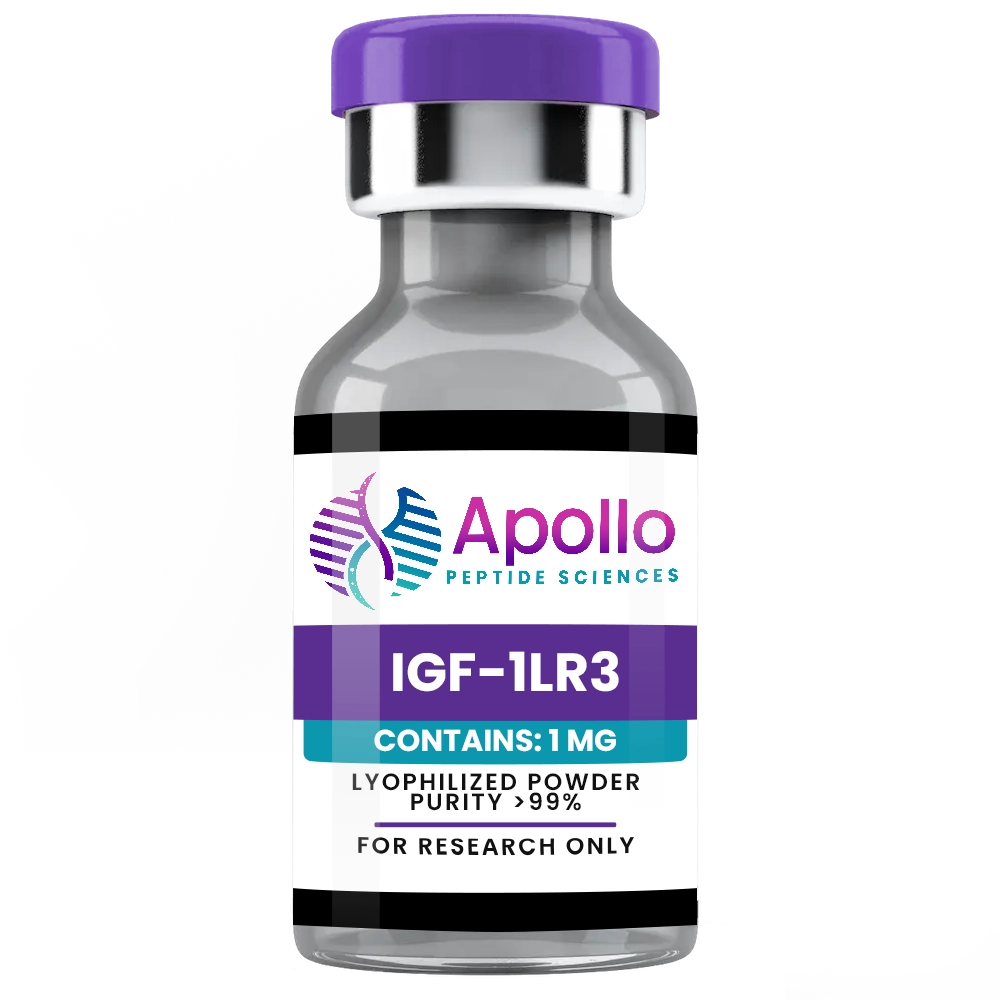
Buy IGF-1 LR3
Long R3 IGF-1 — promotes muscle hyperplasia and satellite cell activation for permanent muscle fiber growth
Who This Is For
Serious strength athletes and bodybuilders who have maximized hypertrophy through training and want to add permanent muscle fiber creation beyond what conventional protocols can deliver.
IGF-1 LR3 — Downstream Anabolic Data
IGF-1 LR3 is a modified version of insulin-like growth factor 1 with an arginine substitution that prevents binding protein deactivation — extending half-life 13x over native IGF-1.
vs. native IGF-1 t½
13× longer
Arg3 substitution
Half-life
20–30 hours
once-daily dosing
Primary action
Satellite cell activation
muscle hyperplasia
Cycle length
4–6 weeks
then 4 weeks off
Dose range
20–100mcg/day
post-workout or AM fasted
Synergy
CJC-1295/Ipa
covers full GH/IGF axis
Overview & Benefits
Key Benefits
- Promotes muscle hyperplasia — permanent new fiber creation beyond what training alone achieves
- Post-workout local injection drives hyperplasia in the specific trained muscle at the optimal biological moment
- 20–30 hour half-life provides sustained satellite cell signaling from a single daily injection
- Reduced IGFBP binding means significantly more free IGF-1 available for receptor activation vs. natural IGF-1
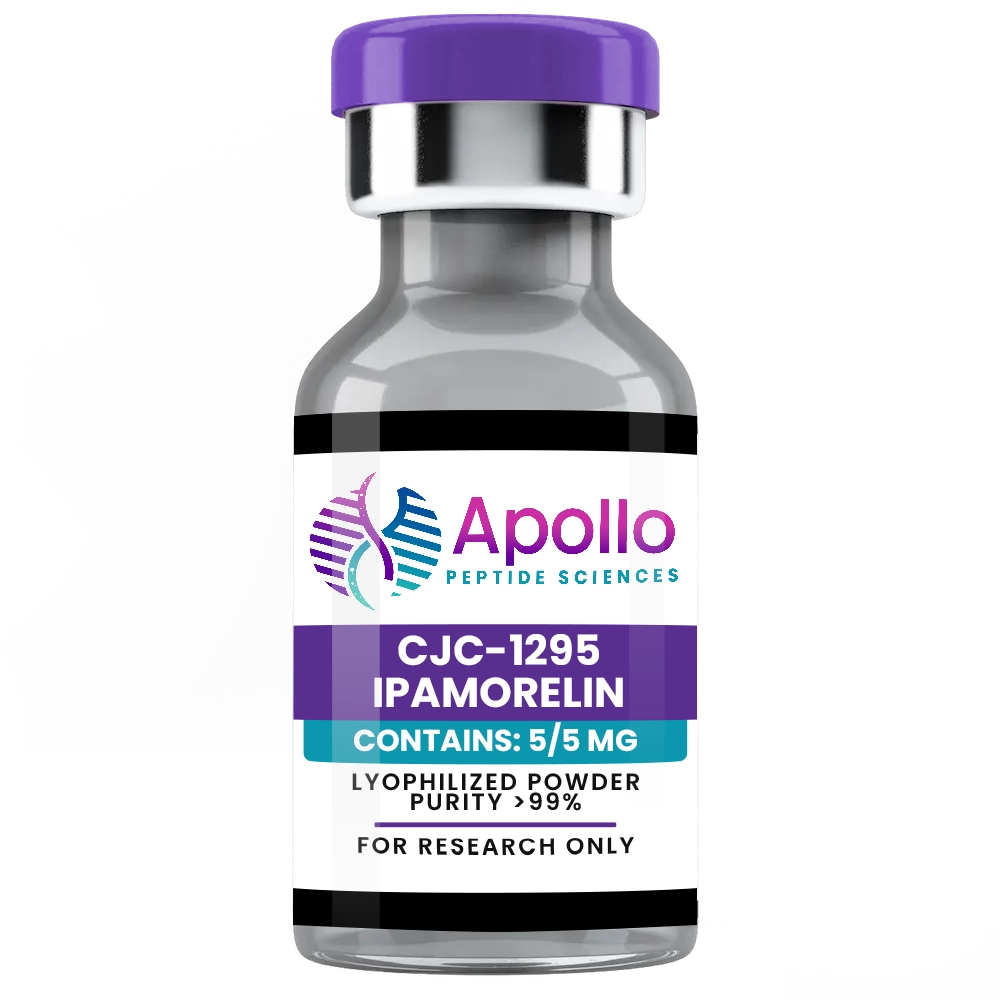
- Pairs with CJC-1295/Ipamorelin for complete GH/IGF-1 axis coverage upstream and downstream
- Short 4–6 week cycles maximize results and prevent receptor desensitization
- Promotes nitrogen retention and protein synthesis through IGF-1 receptor pathways independent of GH
Protocols & Dosing
Post-Workout Local Injection Protocol
Once daily, immediately post-workoutInject directly into the muscle just trained for localized satellite cell activation. Use an insulin syringe. Run 4–6 week cycles, then 4–6 weeks off. Combine with CJC-1295/Ipa for full axis coverage.
Systemic Protocol
Once daily, post-workoutSystemic injection for whole-body IGF-1 elevation. Less localized than IM but simpler. Monitor for hypoglycemia (have glucose source available). Never inject on an empty stomach.
IGF-1 LR3: Direct Receptor Signalling, Satellite Cell Activation, and Extended Half-Life
Research Evidence for IGF-1 LR3 in Anabolic and Metabolic Applications
Key Studies
Francis GL, et al. "Insulin-like growth factors 1 and 2 in bovine colostrum." Biochemical Journal (1988)
Foundational characterisation of IGF-1 structural determinants; later extended by the same group to demonstrate that N-terminal extensions significantly attenuate IGFBP binding affinity.
Tomas FM, et al. "Insulin-like growth factor-I (IGF-I) and especially IGF-I variants are potent inhibitors of protein degradation in lymphocytes." Biochemical Journal (1993)
IGF-1 LR3 produced greater protein anabolism and suppression of proteolysis than equimolar native IGF-1 in lymphocyte cultures, confirming that reduced IGFBP binding translates to greater biological activity per dose.
Barton-Davis ER, et al. "Viral mediated expression of insulin-like growth factor I blocks the aging-related loss of skeletal muscle function." PNAS (1998)
Sustained IGF-1 signalling in aged muscle preserved satellite cell activation potential and prevented the loss of regenerative capacity, directly implicating IGF-1R pathways in long-term muscle maintenance.
Coleman ME, et al. "Myogenic vector expression of insulin-like growth factor I stimulates muscle cell differentiation and myofiber hypertrophy in transgenic mice." Journal of Biological Chemistry (1995)
Transgenic IGF-1 overexpression produced 25–100% increases in muscle fibre cross-sectional area, directly demonstrating the anabolic ceiling achievable through sustained IGF-1R activation.
Mauras N, et al. "Recombinant human insulin-like growth factor I has significant anabolic effects in adults with growth hormone receptor deficiency." Journal of Clinical Endocrinology & Metabolism (2000)
Sustained IGF-1 administration increased nitrogen retention by 35–50% and significantly improved lean body mass in GH-receptor-deficient adults, confirming direct anabolic action independent of GH signalling.
Safety Profile & Side Effects
Hypoglycaemia
highIGF-1 LR3 shares structural homology with insulin and activates insulin receptors at high doses, causing meaningful blood glucose depression. Hypoglycaemia risk is the most clinically significant concern and is exacerbated by fasted administration or concurrent insulin use. Users should dose post-meal and monitor glucose.
Jaw and Facial Bone Growth
moderateSustained IGF-1R activation stimulates periosteal bone growth. Prolonged use at high doses may cause subtle widening of the jaw, brow, and nasal bones — consistent with the acromegalic changes seen in GH excess. Risk scales with dose and duration and is considered irreversible once manifest.
Organ Hypertrophy
moderateIGF-1R is expressed on visceral organs including the heart, liver, kidneys, and spleen. Chronic IGF-1 excess in animal models produces organomegaly. Cardiac hypertrophy — potentially non-physiological (concentric) at sustained supraphysiological levels — is a theoretical risk with prolonged high-dose use.
Peripheral Nerve Tingling and Paraesthesia
lowSome users report transient tingling in fingers and toes, attributed to fluid retention in peripheral nerve sheaths (carpal tunnel-equivalent). Typically resolves with dose reduction.
Theoretical Cancer Risk Promotion
moderateEpidemiological associations between high serum IGF-1 and increased incidence of colorectal, breast, and prostate cancers have been reported, though causality is contested. IGF-1R signalling promotes cellular proliferation and survival pathways that could theoretically accelerate pre-existing tumour growth. This theoretical risk is most relevant for individuals with undiagnosed neoplasms.
Buyer's Guide: IGF-1 LR3
IGF-1 LR3 vs. Other Anabolic Peptides and Agents
Buy IGF-1 LR3
$79.99
Buy Now — $79.99Buy at ApolloResearch-grade · COA verified · Apollo Peptide Sciences
Common Questions About IGF-1 LR3
What does IGF-1 LR3 do?
IGF-1 LR3 activates satellite cells (muscle stem cells) and promotes muscle hyperplasia — the creation of new muscle fibers — rather than just hypertrophy of existing fibers. The LR3 modification extends its half-life from minutes to 20–30 hours, making it practical for daily dosing. The result over a 4-week cycle is structurally measurable increases in lean mass. New fiber creation is more permanent than training-induced hypertrophy and persists after the protocol ends.
What is the IGF-1 LR3 dosage?
Standard protocol: 20–60mcg injected subcutaneously or intramuscularly once daily post-workout or upon waking. Start at 20mcg and assess response (check for hypoglycemia) before increasing. Run for 4 weeks maximum, then take 4 weeks off — continuous use causes receptor desensitization that the off period resets. Do not exceed 100mcg/day; doses above this produce diminishing returns and meaningfully increase hypoglycemia risk.
Should I stack IGF-1 LR3 with CJC-1295/Ipamorelin?
Yes — this is the GH Optimization Stack. CJC-1295/Ipamorelin stimulates upstream pulsatile GH release from the pituitary; IGF-1 LR3 provides direct downstream IGF-1 signaling at the satellite cell level. Running both simultaneously activates the full GH/IGF-1 axis. Timing: CJC-1295/Ipa pre-bed (5 days on/2 off); IGF-1 LR3 post-workout daily. Cycle IGF-1 LR3 in 4-week blocks within your 12-week CJC/Ipa cycle.
Related Protocols
Performance Peptide Guide
Muscle hyperplasia vs hypertrophy — the key distinction for IGF-1 LR3.
GH Optimization Stack
The complete CJC-1295/Ipa + IGF-1 LR3 growth hormone protocol.
CJC-1295 / Ipamorelin
The upstream GH signal that IGF-1 LR3 amplifies downstream.
Elite Performance Stack
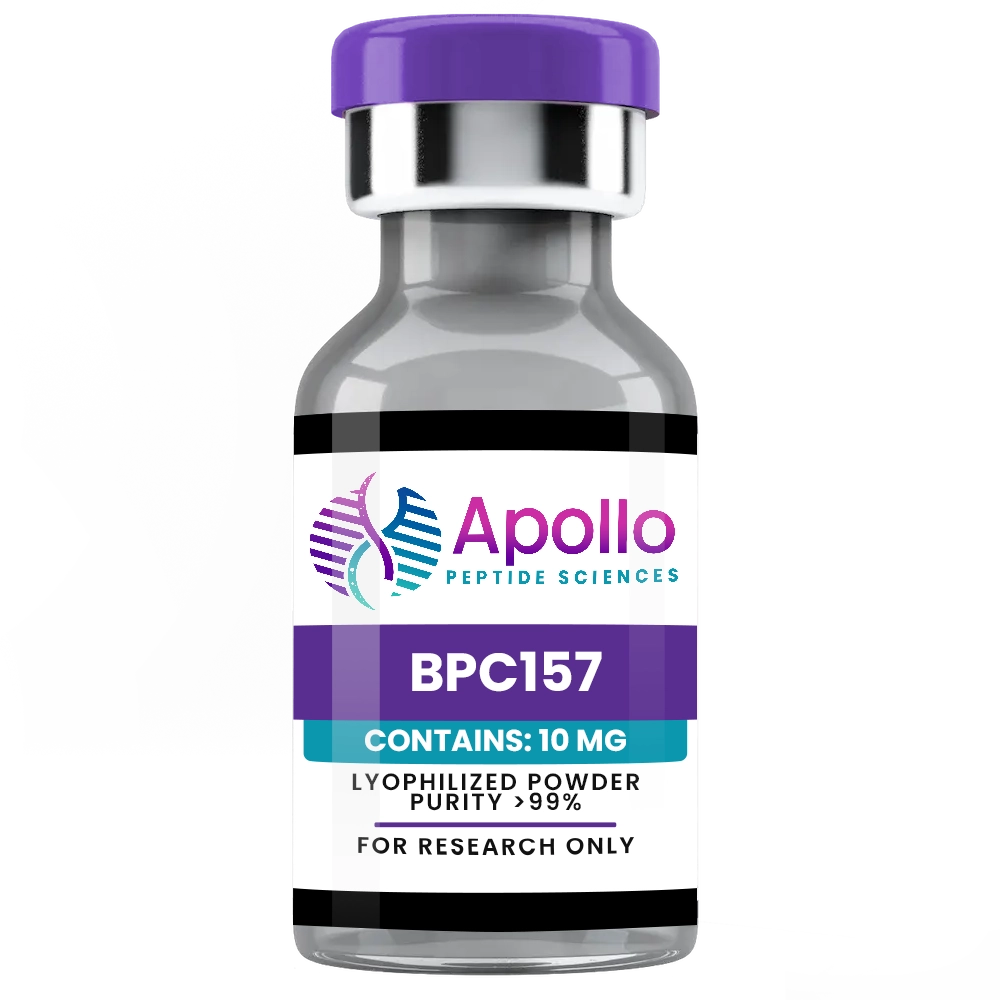
IGF-1 LR3 + GH peptides + BPC-157 for elite training results.
IGF-1 LR3
$79.99